“Where Frontier Hands Built American Steel.”
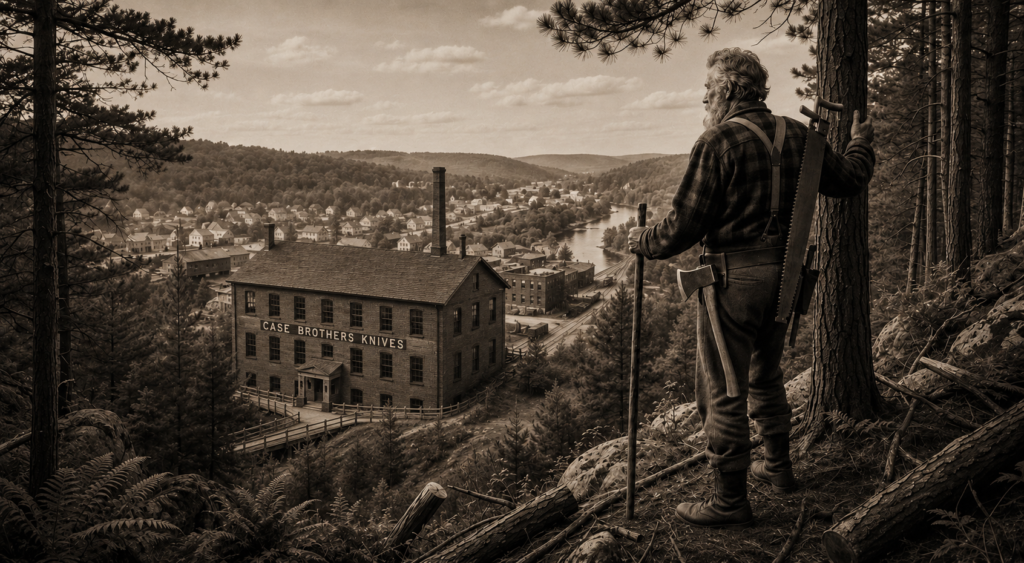
In the old, timbered valleys of western New York where smoke from the forges once curled into the morning frost and wagon wheels carved ruts into muddy roads the Case and Champlin families built more than knives. They built a legacy.
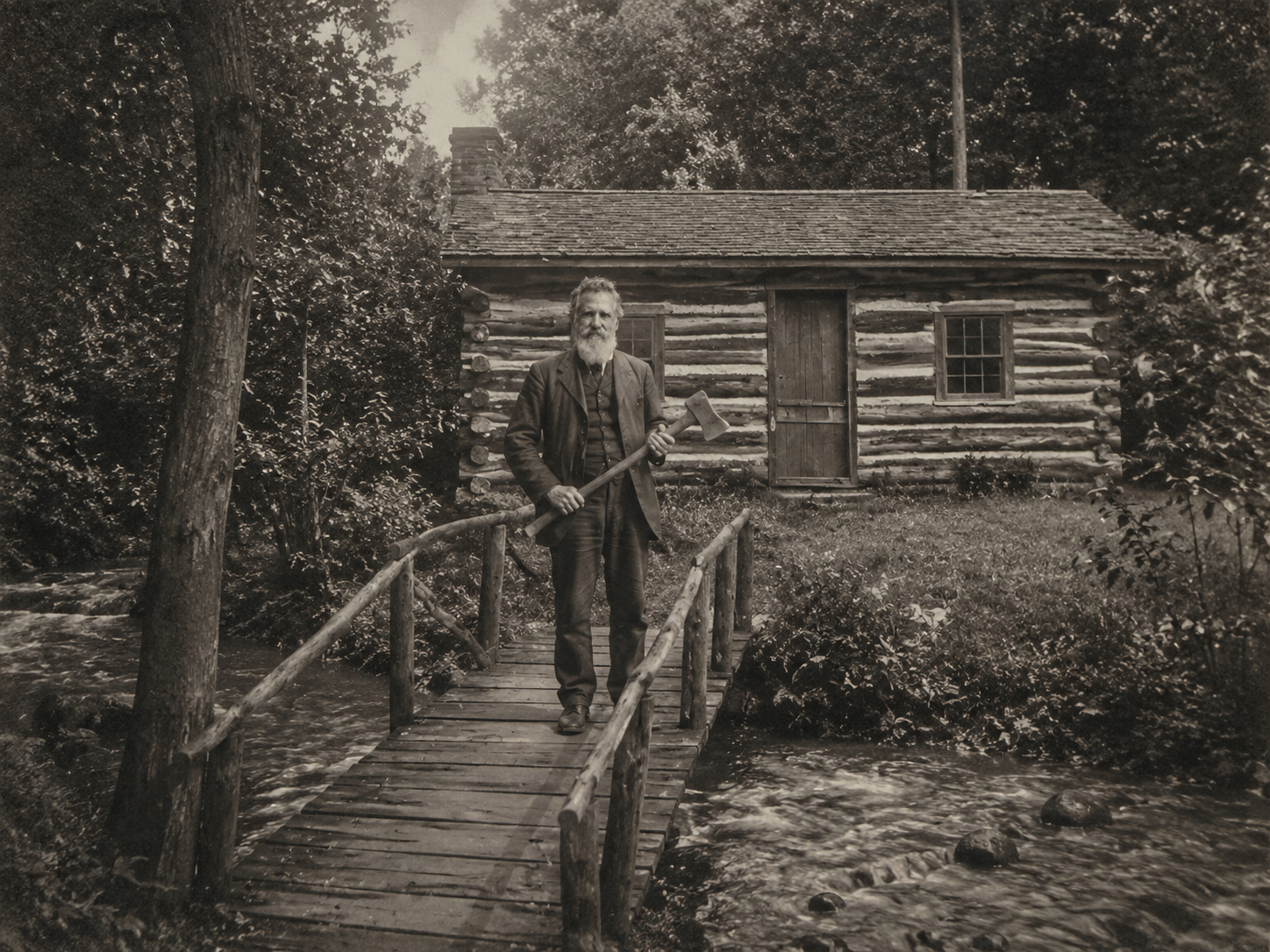
Kinfolks is the story of that legacy: a chronicle of pioneers, blacksmiths, frontier traders, and restless craftsmen whose wanderings carried them from the deep woods of Cattaraugus County to the plains of Nebraska and the cutlery towns of Pennsylvania. From the patriarch, Job Case who cleared land by hand, carved cabins out of hardwood forest, and raised a brood whose grit matched his own came generations of cutlers whose lives read like folklore.
As the decades rolled on, the family splintered and re‑formed under new names: Case Brothers, Cattaraugus Cutlery, W.R. Case & Sons, and eventually Kinfolks, founded in 1926 when three cousins Russ Case, Tint Champlin, and Dean Case joined forces. Their factories echoed with the thud of drop hammers, the ring of grinders, and the laughter, feuds, and stubborn endurance of a family bound by craft as much as by blood.
This narrative follows the pioneers who built these cutlery empires men who traveled by wagon across open prairie selling knives from saddlebags, who rebuilt after fires and failures, who fought in world wars and returned to their benches, who raised barns, cleared acres, forged steel, and carved their names into the history of American manufacturing.
It is also the story of the women who kept households standing during long sales seasons, ran the books when the factories struggled, and sometimes saved entire businesses with nothing more than fast wits and a roll‑top desk full of papers.
Across a century of booms and busts, Kinfolks knives became tools of hunters, soldiers, farmers, and families objects passed down like heirlooms, carrying stories of those who once walked the ridges and river valleys of Little Valley, New York.
Kinfolks is more than a company history.
It is a frontier saga of kin, craft, loss, triumph, and the stubborn American spirit hammer‑struck, leather‑wrapped, and carried forward by generations who believed that a good knife, like a good name, ought to last.